
We Started with a Question:
Why Are Modern Planters So Fragile, Heavy & Boring?
Born in a modest workshop in 2022, CubicExtruder was founded to merge parametric algorithms, mineral-infused bio-composites, and robotic 3D extrusion into timeless living architecture.
From A Midnight Garage Experiment to Industrial Print Farm
In late 2022, two mechanical engineers and design purists in Pune found themselves frustrated with the existing botanical market. High-end ceramics weighed dozens of kilograms and cracked if bumped; mass-market injection pots generated immense landfill waste and suffered from inadequate drainage holes that led to root rot.
The answer lay in digital additive manufacturing — but not the typical plastic hobbyist trinkets. We built our first custom large-format machine using reinforced aluminum extrusions and high-flow thermal hotends. Night after night, our workshop echoed with the rhythmic hum of stepper motors.
It took 47 failed iterations of layer adhesion testing, cooling calibration, and composite filament experimentation before we produced Prototype #001 — the helical HexaSculpt. When light hit those 0.2mm mathematical ridges for the first time, we knew we had something that belonged in high-end architectural spaces.
Shortly after, we invented our Vortex Sub-Irrigation System — a 3D printed dual-chamber reservoir with capillary wicking mesh that lets indoor plants drink on demand for up to 14 days without human intervention.
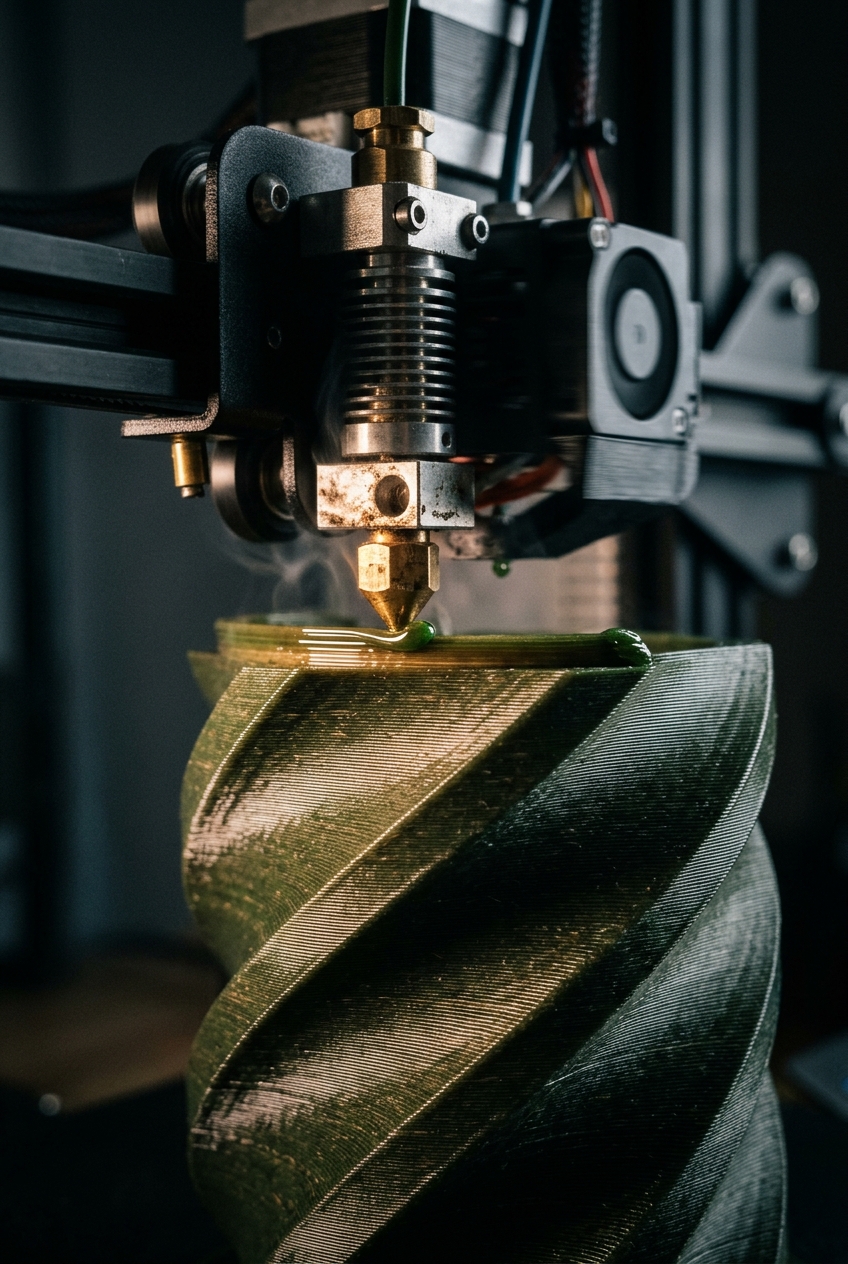
The Four Architectural Pillars of CubicExtruder
We don’t treat 3D printing as a novelty — we treat it as an industrial design philosophy grounded in mathematics, botany, and zero waste.
Algorithmic Living Form
Geometries designed via mathematical parametric curves — Mobius loops, helical spirals, and Voronoi meshes that cannot be manufactured by any traditional injection mold.
Bio-Circular Materials
100% plant-based Bio-PLA+ derived from fermented sugarcane and cornstarch, infused with micro-mineral powder for superior thermal insulation and zero toxic emissions.
Root-First Engineering
Every planter is built around botany: internal water reservoirs, capillary wicking grids, aeration chimneys, and concealed snap-fit saucers that keep roots healthy.
Zero-Tooling Agile Scale
No expensive $10,000 steel molds. No minimum order quantities. We print custom dimensions, corporate logos, and architectural prototypes with 24-48h dispatch.
How Every CubicExtruder Piece Is Crafted
From digital equations to hand-finished physical vessels — three rigorous phases that ensure absolute structural integrity.
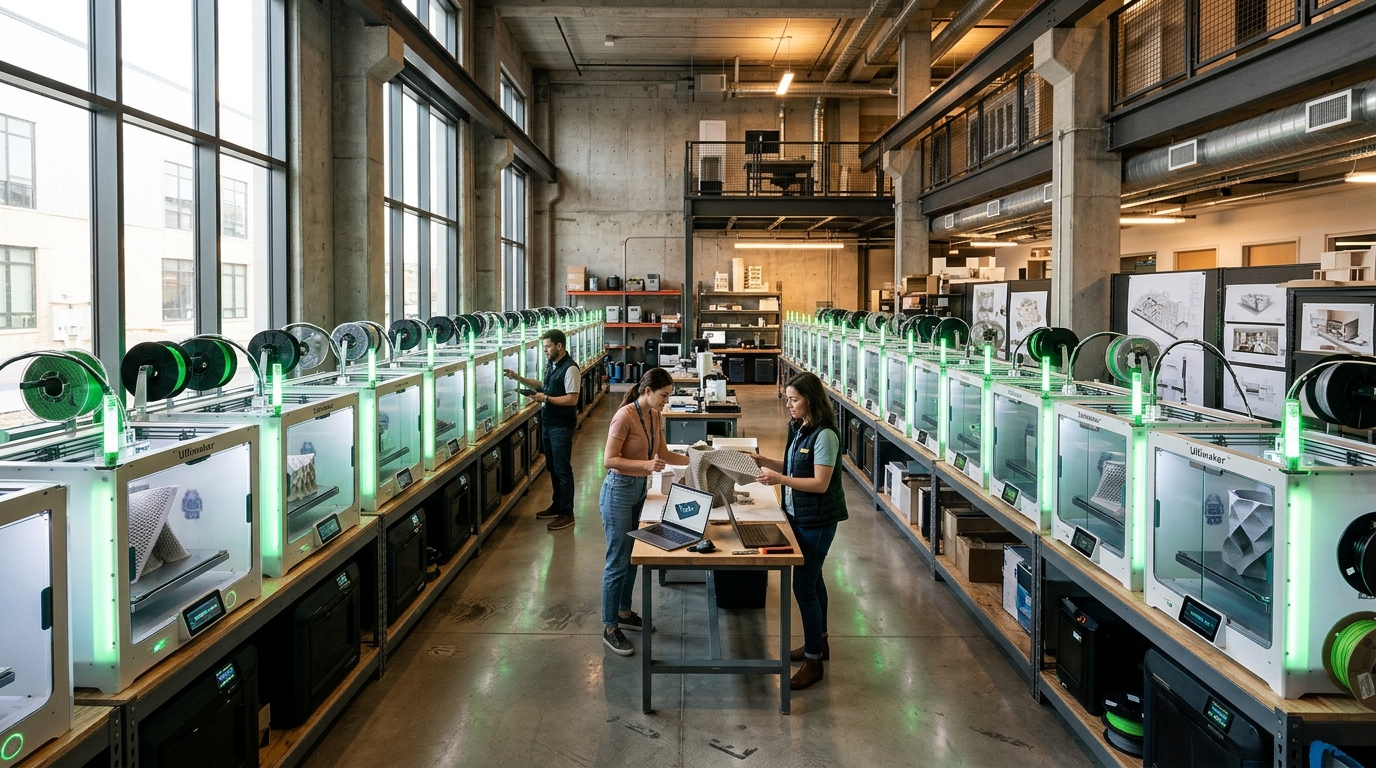 Phase 01
Parametric CAD & Slicing
Models are parametrically simulated for structural flex and soil pressure. G-code trajectories are programmed to ensure continuous shell deposition without weak seam lines.
Phase 02
24/7 Robotic Thermal Deposition
High-temperature multi-sensor extruders deposit micro-layers at 0.2mm resolution. Multi-fan active cooling locks each layer solidly in place with zero dimensional warping.
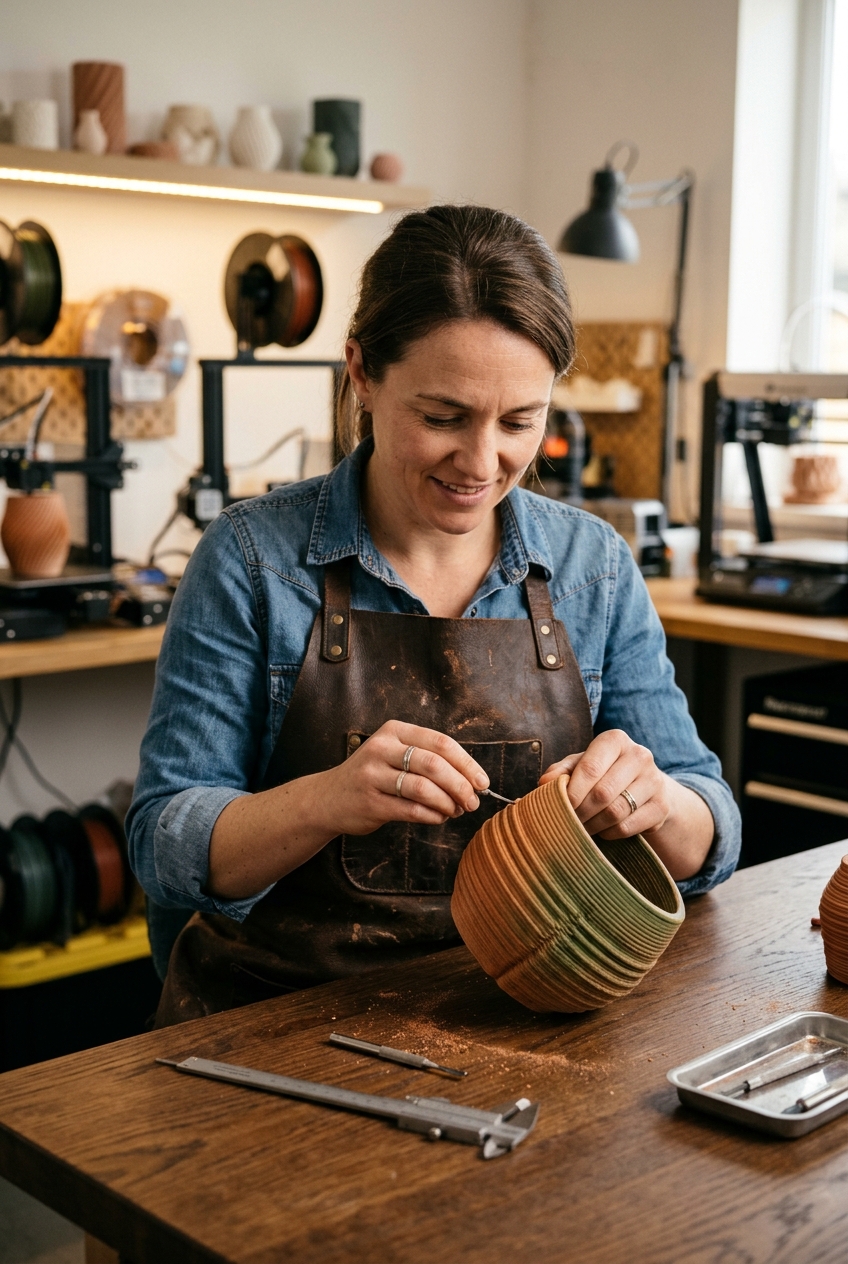 Phase 03
12-Hour Hydro-Testing & Inspection
Every planter is filled with water for 12 hours to verify 100% leak-proof reservoir seals. Edges are hand-finished and inspected before boxed in recycled packaging.
Hours of Print Calibration
Continuous machine optimization and material flow calibration.
Vessels Thriving
Shipped across homes, corporate offices, and botanical studios.
Tooling & Mold Waste
Every gram of bio-composite is printed directly into final form.
Watering Autonomy
Average plant self-reliance with our sub-irrigation reservoir.